Introduction: The High-Stakes “handshake” with Your commercial office furniture
Imagine this: After months of planning, your company’s new flagship office is finally ready for furnishing. The budget is approved, the design vision is clear—sleek, professional, and reflective of your brand’s ascent. You and your team spend weeks online, compiling a shortlist from glossy catalogs and impressive websites. You finalize specifications based on stunning photographs and detailed PDFs. The order is placed, the deposit paid, and the anticipation builds.
Then, delivery day arrives,You couldn’t wait to open the commercial office furniture
you had been longing for.
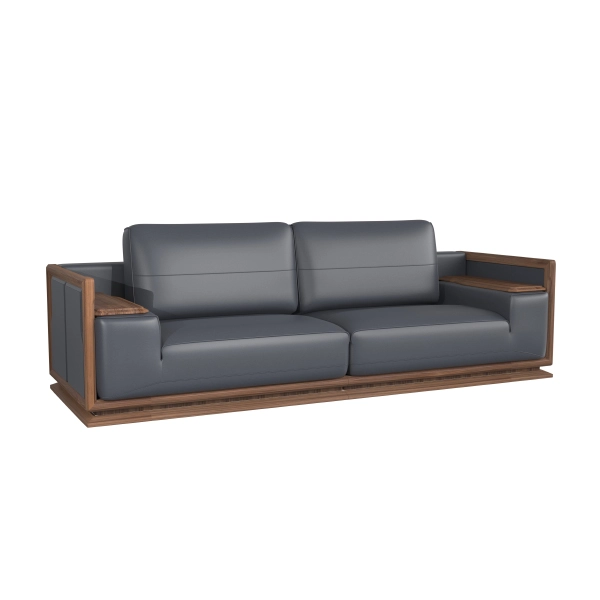
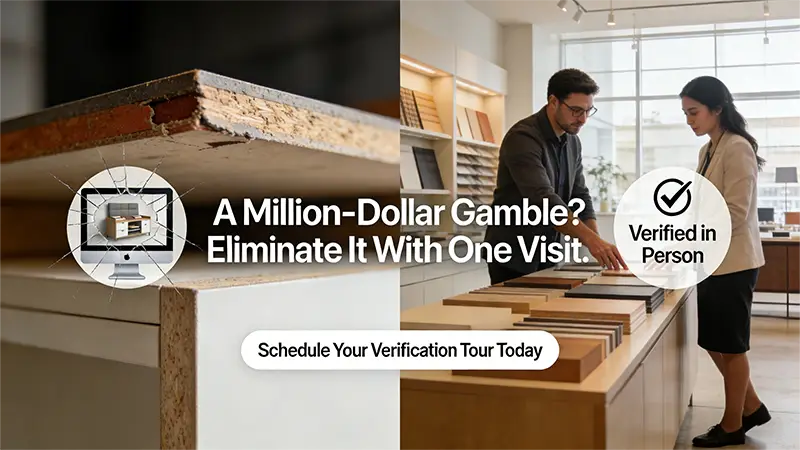
The “rich walnut” boardroom table looks orange and plas ticky and Lack of the high-end and luxurious feel of solid wood under your office lights. The fabric on the managerial chairs feels stiff and cheap, not luxe as promised,and it’s also uncomfortable to sit on it. The much-anticipated reception desk has a visible, uneven seam, and the modular workstations feel wobbly. The color palette, so harmonious on screen,creates an atmosphere of grandeur and luxury, clashes violently in reality. Your dream space is now a costly nightmare—project delays, budget overruns, extensive financial losses,and a tangible blow to team morale and corporate image.
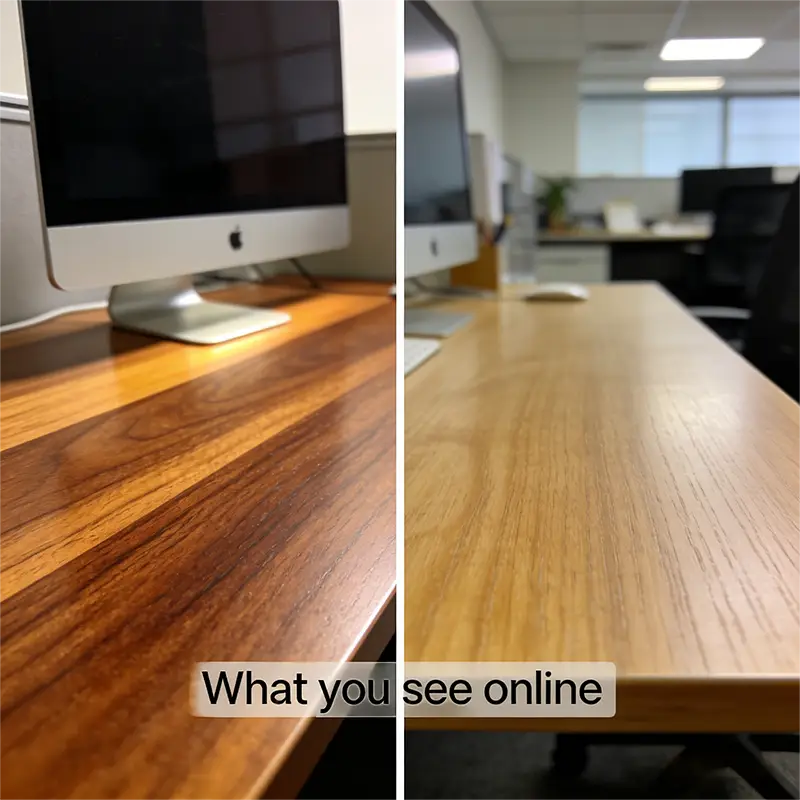
This scenario is not dramatic fiction; it’s a recurring, expensive reality in B2B furniture procurement. The core failure is information asymmetry. The perfectly pixelated image on the screen is the result of meticulous design, and the gap between it and the physical objects in your space is where risks, regrets and economic losses arise.
In an era of digital convenience, the most powerful risk-mitigation tool is paradoxically analog: the physical showroom and factory visit. For discerning buyers who view commercial office furniture not as a commodity, but as a long-term investment in culture, productivity, and brand identity, this step is not optional—it is essential due diligence,It is also a responsibility towards oneself, the company, and one’s own team.
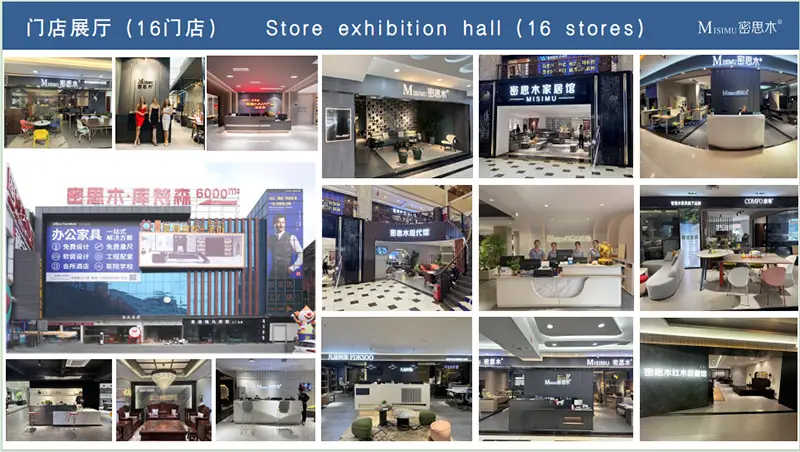
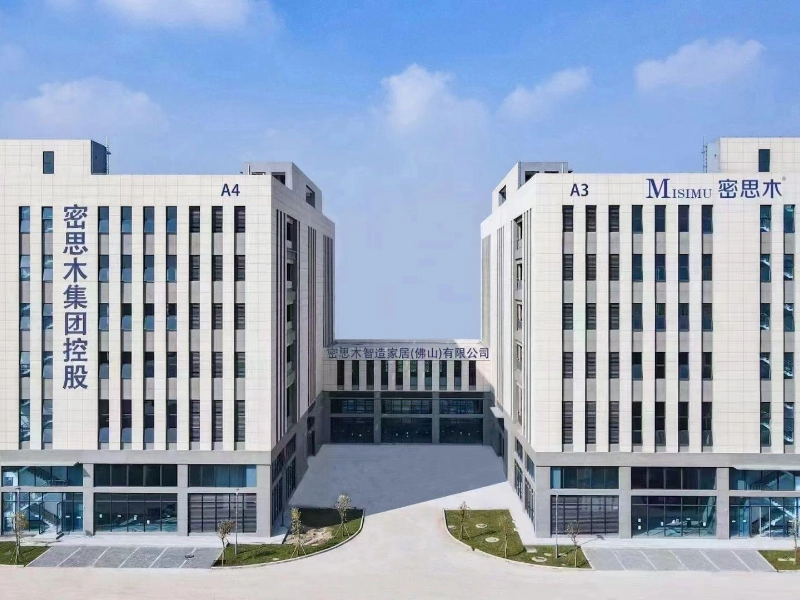
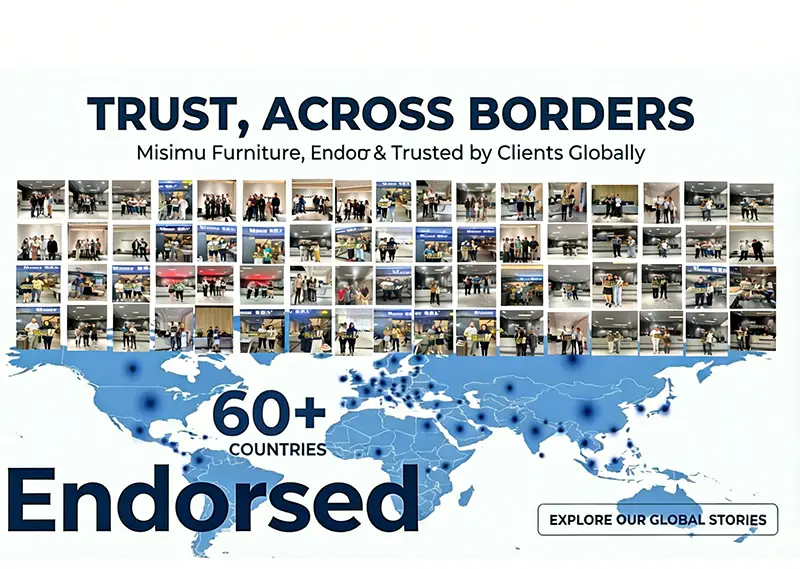
As a comprehensive manufacturer and designer with a history of 14 years, it has 17 exhibition halls and factories, with a total area of over 100,000 square meters., we have a unequivocal observation: clients who walk our floors, touch our materials, and see our process sign contracts with unwavering confidence. This article details why an on-site visit is the ultimate strategy to transform your procurement process from a gamble into a guaranteed success.
Part 1: The Four Invisible Pitfalls of “Screen-Only” Sourcing
Before embracing the solution, one must fully understand the risks of the digital-only path. Here are the four most common and costly pitfalls.
Pitfall 1: The “Render Gap” – Material & Craftsmanship Deception
A photograph is a masterpiece of lighting, editing, and angles. It can make particle board look like solid oak and a thin laminate appear as deep, hand-rubbed lacquer. Online, you cannot:
* Assess the true grain, warmth, and weight of solid wood.
* Feel the smoothness and depth of a paint finish or distinguish a premium polyester coating from a cheap alternative.
* Inspect the precision of edge banding, the robustness of drawer glides, or the quality of welding on metal frames.
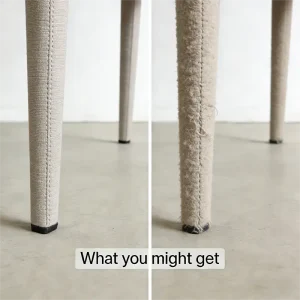
* Judge the durability and hand-feel of fabrics and upholstery.
The Cost: Receiving commercial office furniture that feel inexpensive and fail to convey the quality and prestige your brand requires. The disappointment is both aesthetic and tangible, directly impacting perceived value.
Pitfall 2: The “Spatial Illusion” – Misjudging Scale & Proportion
Numbers on a spec sheet (L2400 x W1200 x H750mm) are abstract. Humans are terrible at translating dimensions into three-dimensional space. A 4-meter conference table might look modest in a vast, minimalist showroom photo but can utterly dominate your actual meeting room, hindering movement and comfort.
* You cannot gauge walking space around furniture clusters.
* You cannot verify if storage units provide practical, accessible volume.
* You risk creating an environment that feels either cramped and chaotic or sparse and impersonal.
Cost: An commercial office furniture that is not properly sized hinders the workflow, reduces office efficiency, compromises safety, damages the company’s image, and fails to achieve the expected functionality and aesthetic harmony. In such cases, you have no choice but to reconfigure or replace it.
Pitfall 3: The “Ergonomic Fiction” – Data That Doesn’t Translate to Comfort
A chair may list 14 adjustable features, but do they work intuitively together to support *your* body? A desk may be marketed as “ergonomic,” but does its height range suit your team? Brochures talk about lumbar support and waterfall seats; reality is felt in the lower back after hour three.
* Can you test the tilt tension, armrest movement, and seat depth?
* Can you verify the stability of a desk when writing or leaning?
* Is the monitor arm truly smooth to adjust?
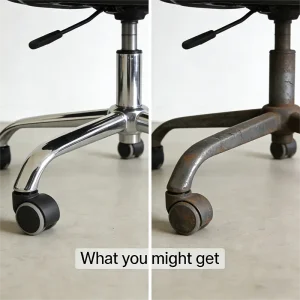
The Cost:Employee discomfort, fatigue, and if an employee gets injured, they will file a claim against the company. Poor ergonomics directly correlate to decreased productivity, increased absenteeism, and lower job satisfaction—a severe hidden operational cost.
Pitfall 4: The “Fragmented Vision” – Incoherent Style & Integration
You may select a beautiful executive desk, elegant guest chairs, and stylish shelving—all from the same online catalog. But how do they live together? Under consistent lighting, in a shared space, do the finishes complement or conflict? Does the design language flow from the boardroom to the collaborative zone to the cafe?
Online shopping often results in a collection of isolated products, not a cohesive environment.
The Cost: An office that lacks a unified professional identity, appearing piecemeal and unplanned. This undermines the very brand narrative you are investing in through your physical space.
Part 2: The Showroom & Factory Visit: Your “Zero-Risk” Verification Protocol
This is where our model provides a decisive advantage. We transform your procurement risk into certainty through transparency and tangible experience.
Solution 1: [Sensory Verification] – Ending Doubt with Touch, Sight, and Use
Forget trusting pixels. Trust your senses.
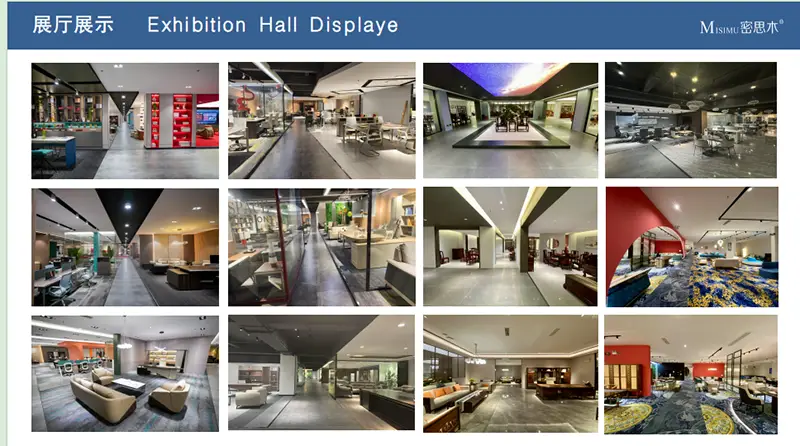
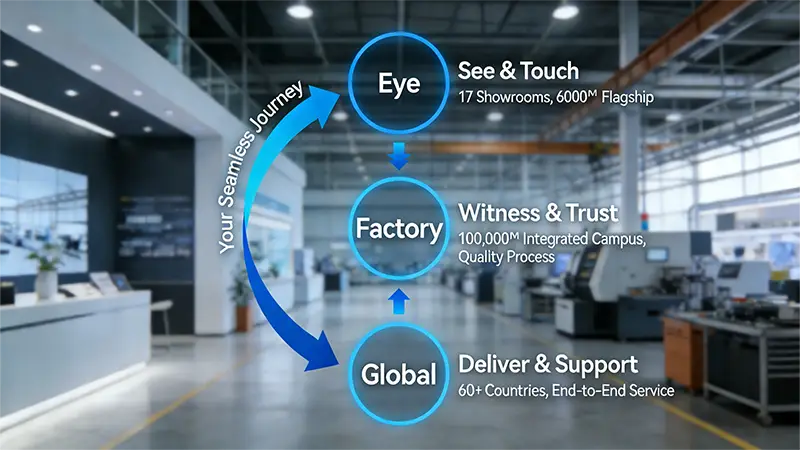
* Misimu advantage in Action: We invite you to any of our 17 showrooms—particularly our flagship 6000 sqm space, we have various styles and categories of commercial office furniture.—which functions as a living material library and quality showcase. Here, you can:
* Run your hand over the same **solid wood, premium paint, and multi-layer board** options we use in production, comparing entry-level to high-end lines side-by-side.
* Open and close drawers to feel the dampened, silent action of quality slides.
* Inspect the underside of a table, the back of a panel, the stitching on a seat—areas where true craftsmanship (or the lack thereof) is revealed.
* Value to You: You establish concrete, physical benchmarks for quality. You move from subjective descriptions (“high-end”) to personal, verified judgment. This builds unshakeable confidence in your specification.
Solution 2: [Scenario Immersion] – Experiencing Space & Function Before Commitment
Your project isn’t about individual items; it’s about creating ecosystems for work.
* Our Advantage in Action: Our showrooms are staged as complete, functional environments. You don’t just see a desk; you experience a fully furnished CEO’s office. You can walk into a functioning meeting room, relax in a client lounge**, or evaluate sightlines in a simulated open-plan work zone.
* Test how a phone booth dampens sound.
* Feel the atmosphere in a collaborative coffee area.
* Assess the workflow in a reception sequence.
* Value to You: You effectively “test-drive” your future office. This pre-validation of spatial planning, functionality, and ambiance is the most powerful way to prevent expensive design errors and ensure every zone fulfills its purpose.
Solution 3: [Collaborative Design] – Achieving Zero-Communication-Error Customization
Email chains and digital renders are prone to misinterpretation. The final step in design must be physical.
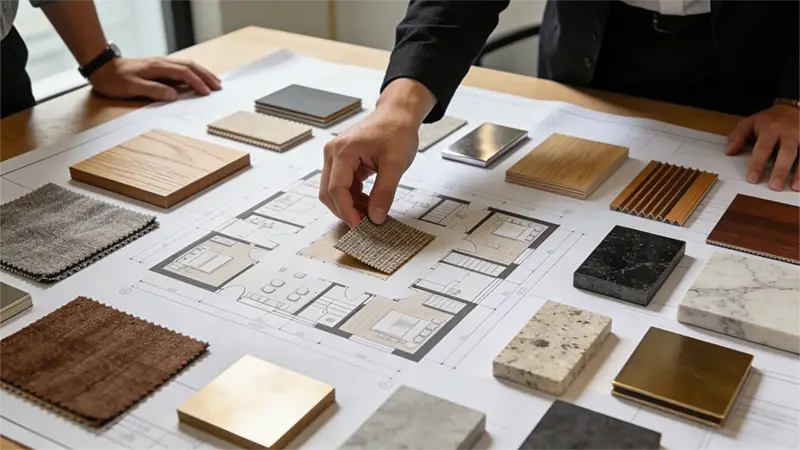
* Our Misimu Advantage in Action: Bring your architect’s plans, your inspiration mood board, or your unique functional requirement to our showroom. Work **alongside our in-house design team surrounded by thousands of physical samples: wood swatches, paint panels, fabric books, metal finishes, and hardware options.
* Instantly compare and combine materials.
* Mock up adjustments using existing commercial office furniture pieces.
* Finalize custom dimensions and details with immediate visual and tactile feedback.
* Value to You: It compresses the design approval cycle from weeks of back-and-forth into hours of collaborative, concrete decision-making. It ensures your unique vision is perfectly understood and technically executable before a single cut is made in our factory.
Solution 4: [Transparent Provenance] – Witnessing the Foundation of Your Trust
A showroom shows the promise; the factory shows the proof.
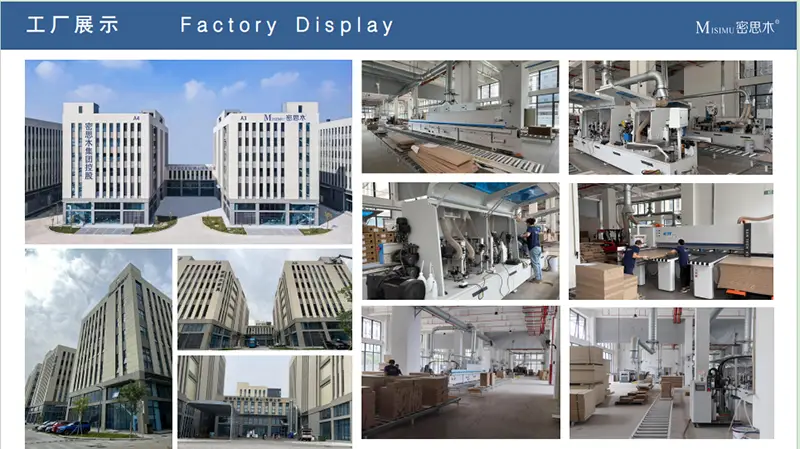
* Misimu Advantage in Action: We extend the invitation to our 100,00 sqm integrated production campus. This is not about showcasing overwhelming, impersonal automation. As a focused manufacturer, we show you:
* Controlled Quality Processes: See how materials are inspected, how joinery is executed, how finishes are applied and cured, and how every piece undergoes rigorous final inspection.
* The Capability Behind Customization: Observe the skilled work and flexible systems that allow us to accommodate non-standard sizes, integrated features, and unique design details.
* Operational Integrity: Witness the organization, cleanliness, and pride that underpin a reliable manufacturing partner.
* Value to You & Our Strategic Positioning: You gain confidence not from a sales pitch, but from observable operational excellence. It demonstrates that we are a reliable, transparent, and accountable partner.
* Transforming a Perceived “Weakness”: We are not the world’s largest, fastest mass-producer. This is our strategic strength for you. It means your project will not be a anonymous line item in a queue of 10,000. You receive focused attention, flexible adaptation to your needs, and meticulous quality control. We are built for partnerships, not just transactions.
Part 3: Beyond the Purchase: Building a Long-Term, Reliable Supply Chain Partnership
Choosing a partner with this level of transparency is the first step in a deeper relationship. For over 60 countries, we have evolved from a supplier to a one-stop, extension-of-your-team partner.
* The Integrated Journey: The confidence built in our showroom flows seamlessly into the rest of our design-to-delivery service:
- Co-Create with Confidence (in our showroom/factory).
- Produce with Provenance (in our observed factory).
- Deliver with Expertise (via our managed global logistics).
- Support with Commitment (through our dedicated service team).
* The Value of 14 Years of Integration:Our experience as both maker and designer means we understand the entire chain—from sketch to installation. We anticipate challenges in production, shipping, and assembly, designing solutions proactively rather than reacting to problems. This results in smoother projects, fewer surprises, and on-budget, on-time outcomes for your offices anywhere in the world.
Conclusion: The Smartest Investment You’ll Make – An Afternoon of Verification
In high-value B2B investment, eliminating uncertainty is the highest form of value creation. For an commercial office furniture project that impacts finances, culture, and brand for a decade, the cost of a site visit is negligible. The cost of a major mistake is catastrophic.
We extend a formal invitation: use our physical campus as your final, decisive verification tool.
Do not let your multi-million dollar commercial office furniture project be the victim of a “render gap.” Come, verify, and proceed with absolute certainty.
Schedule Your Exclusive Showroom & Factory Verification Tour Today]— See, touch, and test the future of your workspace. Let’s build your success on the solid foundation of reality.